
Start a Marshall Resident Search
Begin with the record that matches the question. An address or an owner name belongs in the Harrison Central Appraisal District search. A transfer, lien, probate clue, or old legal description belongs with the Harrison County Clerk. A current registration question belongs with the Texas Secretary of State or Harrison County Elections. Those sources describe different kinds of connections, so an owner name, a mailing address, and a voter result should never be treated as the same fact.
For an earlier household, switch to Marshall Public Library, the Harrison County Historical Museum, or the Texas State Library and Archives Commission. Library newspapers reach back to 1849, and the historical trail includes a documented 1893 city directory and TSLAC's verified 1924 Marshall volume. A directory entry shows a person’s connection at publication time, not a current address or legal ownership.
- Search HCAD by address, owner name, or parcel identifier and save the Property ID, GEO ID, situs address, and legal description.
- Use the current owner or legal description in the county recorder index, searching both grantor and grantee roles.
- Check the official voter tool only for its intended registration question, then ask Elections about lawful file access if an aggregate record is needed.
- Compare the result with a court, obituary, probate, or historical-directory source that fits the person and time period.
- Use a targeted Texas Public Information Act request, the courthouse counter, or library reference help when a documented source has no online index.
Marshall Records Custodians
Harrison County keeps the principal property and court trail in Marshall. The Clerk records real and personal property, liens, plats, assumed names, marriages, vital records, wills, probate, and county-court material. HCAD maintains the appraisal record and parcel map. Elections has the local registration and precinct route. Each office can explain its own index, fees, and request channel; none can certify that a collection of hits proves where someone lives.
Harrison County Clerk
200 W Houston, Suite 143
Marshall, TX 75671
903-935-8403
Harrison Central Appraisal District
Property and parcel records
Harrison County, Texas
Online public search
Harrison County Elections
415 E Burleson St.
Marshall, TX 75670
903-935-4822
Marshall Parcel Records at HCAD
HCAD's public property search is the strongest current address starting point. Its visible modes include compound text, name, Property ID, Owner ID, Geographic ID, Reference ID, Tax Office ID, property address, and advanced search. A broad search may show only the first 1,000 results. Narrow a common surname or street before reading a parcel card.
| HCAD field | Use in a Marshall search | Limit |
|---|---|---|
| Property Address / Situs Address | Locates the taxed parcel | Not the owner’s mailing location |
| Owner Name | Connects a tax account to a named owner | Does not establish occupancy |
| PropID and GEO ID | Carry a parcel between map and clerk research | Use with the legal description |
| Last Deed Date | Suggests where a deed-chain search begins | Not the complete conveyance history |
The HCAD search screen illustrates the address, owner, and account entry routes. 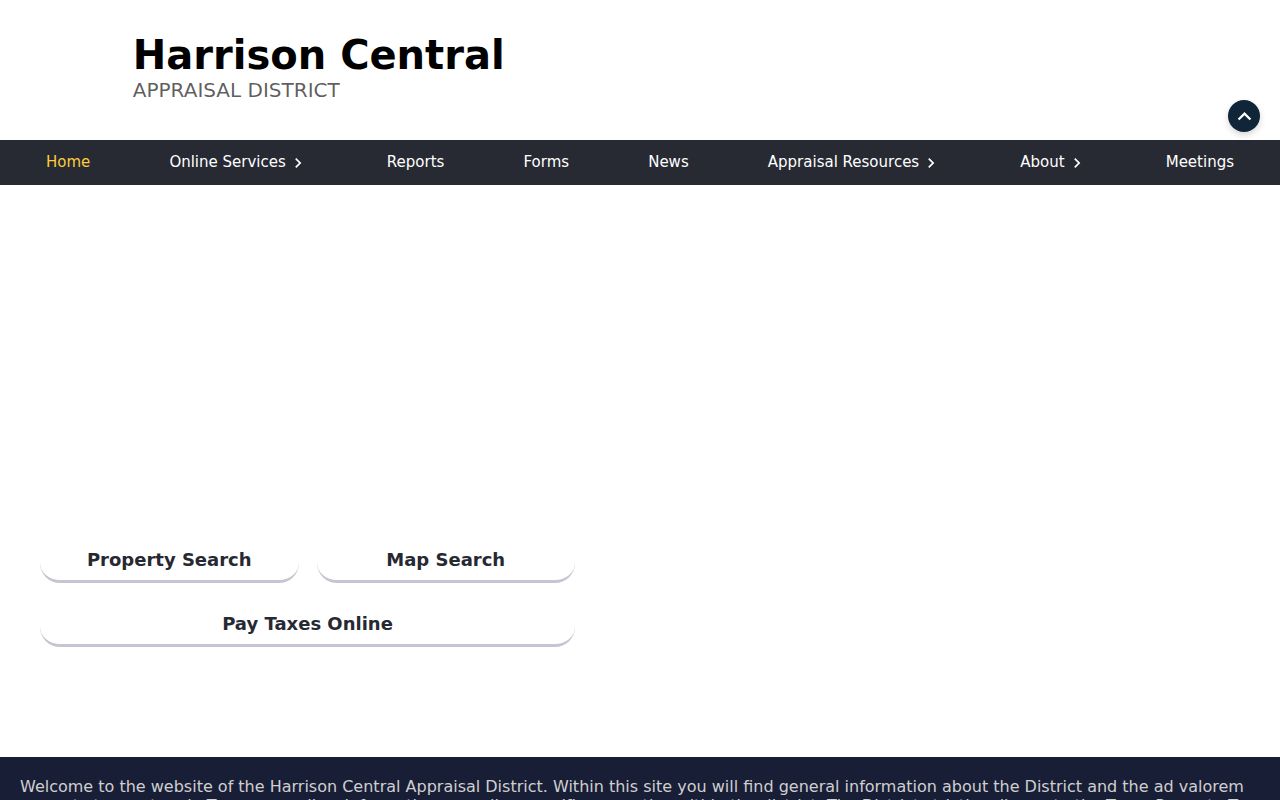 Record the identifiers from a matching parcel before moving to another index, because the number is more stable than an old street description.
Marshall Deed Record Index Clues
The historical Harrison Kofile index has a useful date split. It verifies deed index books from 1840 through 1920, deed-of-trust indexes from 1880 through 1907, and probate minutes from the 1800s through 2005. Current county self-service is separate. Search a buyer as grantee, then search the seller as a later grantee, while preserving book, volume, and page references.
Kofile’s Harrison search shows its historical index-book controls. 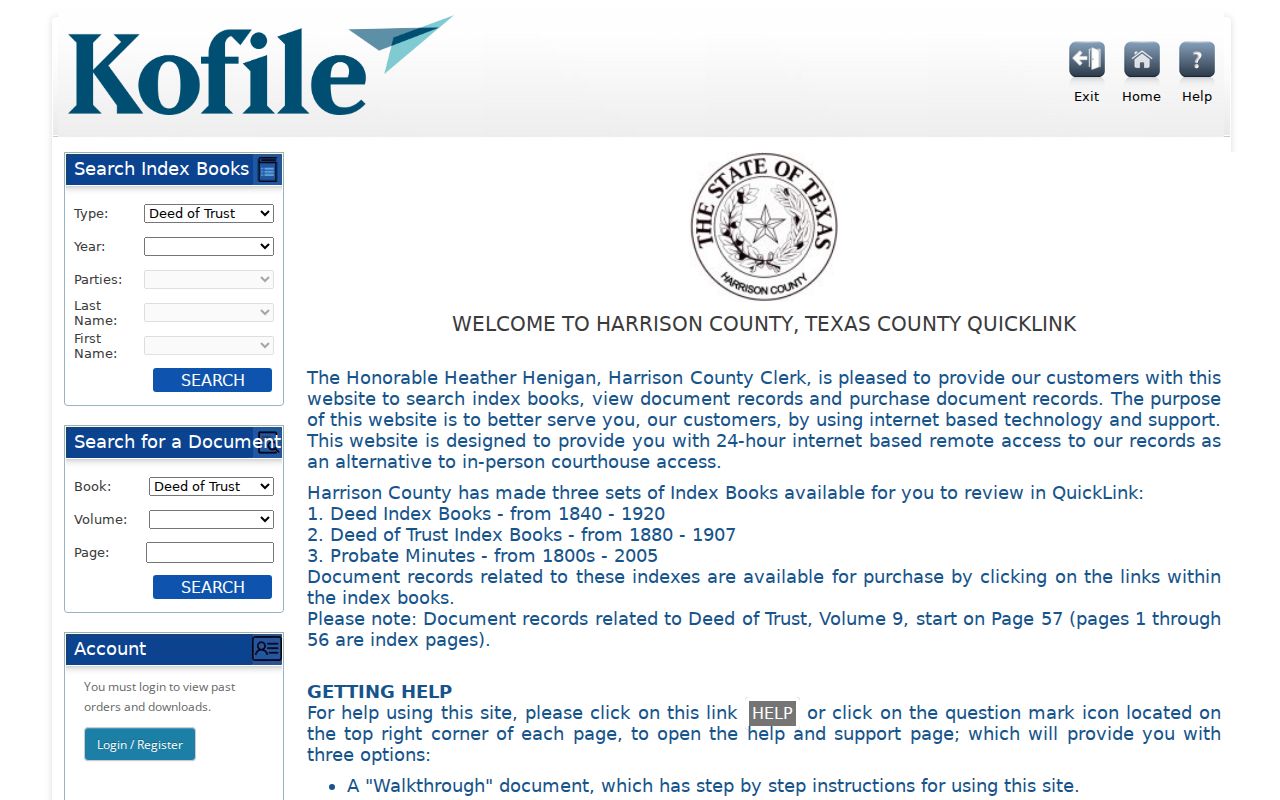 Its index is a guide rather than the underlying instrument, so use the Clerk, a paid image route, or the courthouse counter when an exact document matters.
Current Marshall Directory Sources
Marshall has no official citywide household roster. The closest current directories are purpose-built records. HCAD lists ownership and tax-mail information; a recorder index lists parties to an instrument; a voter process addresses registration; and the city staff directory lists public roles rather than private households. Read each source for the question it was designed to answer.
| Marshall source | Connection shown | Custodian | Access route |
|---|---|---|---|
| HCAD parcel roll | Owner, situs, mailing address, legal description | Harrison CAD | Online search and map |
| Voter registration | Registration and precinct context within legal limits | Texas SOS / County Elections | Individual lookup or formal request |
| Recorded-instrument index | Grantor, grantee, document trail | Harrison County Clerk | Kofile, current system, counter |
| Municipal records | Citation, code, or administrative event | City of Marshall | Docket, portal, or PIA route |
| Library and museum material | Historical households and local context | Marshall Library / Museum | In-house collections and databases |
For a name that needs careful confirmation, use the Marshall resident lookup process to compare independent records. An owner, a voter, a court party, and a directory occupant are distinct evidence types.
Marshall Voter Record Boundaries
The Texas “Am I Registered?” service is intended for an individual registration and polling question. Its rendered fields were blocked during research, so its current form should be read as displayed. Texas Election Code Chapter 15 identifies public voter-certificate fields, while §13.004 protects Social Security numbers, Texas identification information, and telephone numbers.
The official voter lookup is shown here as the state route. 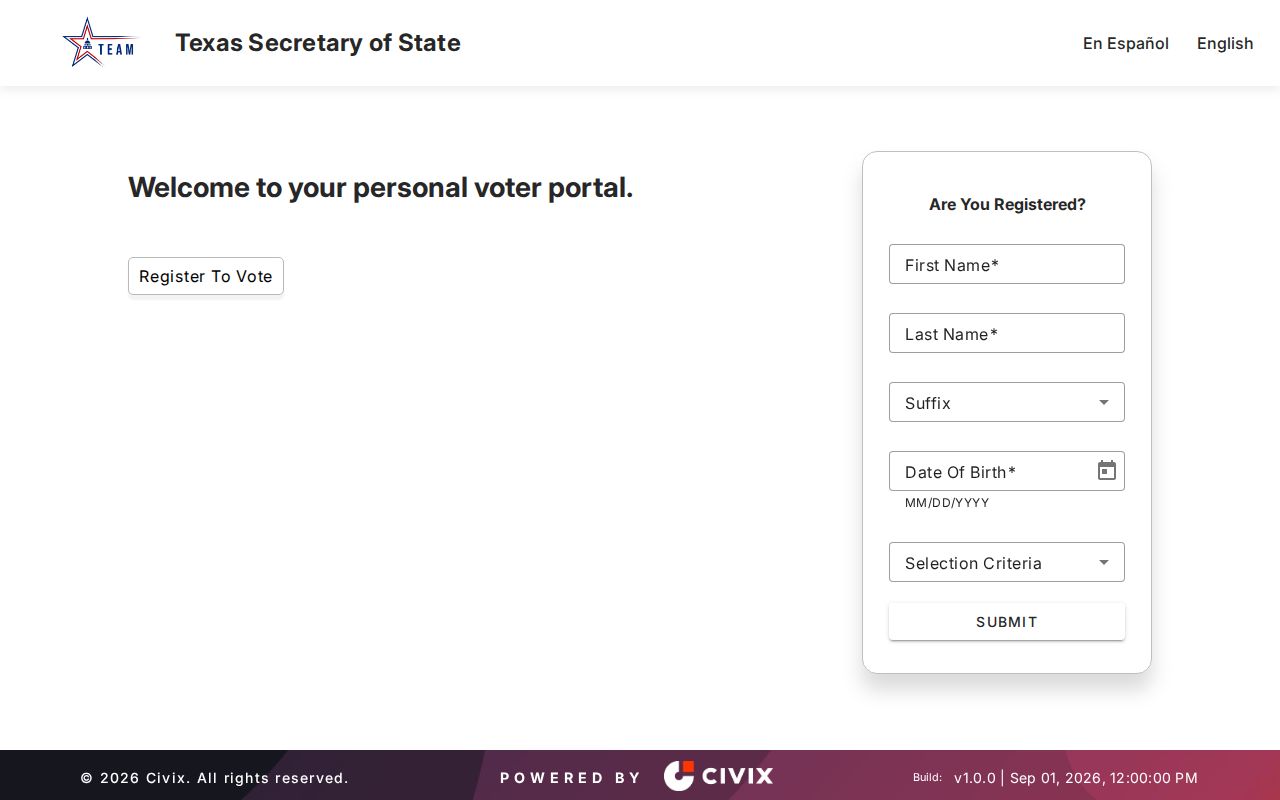 The full voter-file process is different: it uses an SOS form, delivery options, filters, a stated deposit, and Election Code limits. It is not a casual street browse.
Note: A protected voter or Address Confidentiality Program participant may be absent from normal public display, so a missing result does not prove a move.
Marshall Court Record Name Trails
Courts can corroborate a person’s name, case type, filing date, or related party. Marshall Municipal Court publishes docket and warrant links for city-limit matters, while the District Clerk divides civil, family, child-support, property-tax, and adult-felony records from County Clerk responsibilities. The county cites Harrison Tyler public access for post-1987 records, although that portal returned 403 during the research session.
Harrison’s Tyler public-access portal is the county-referenced online route. 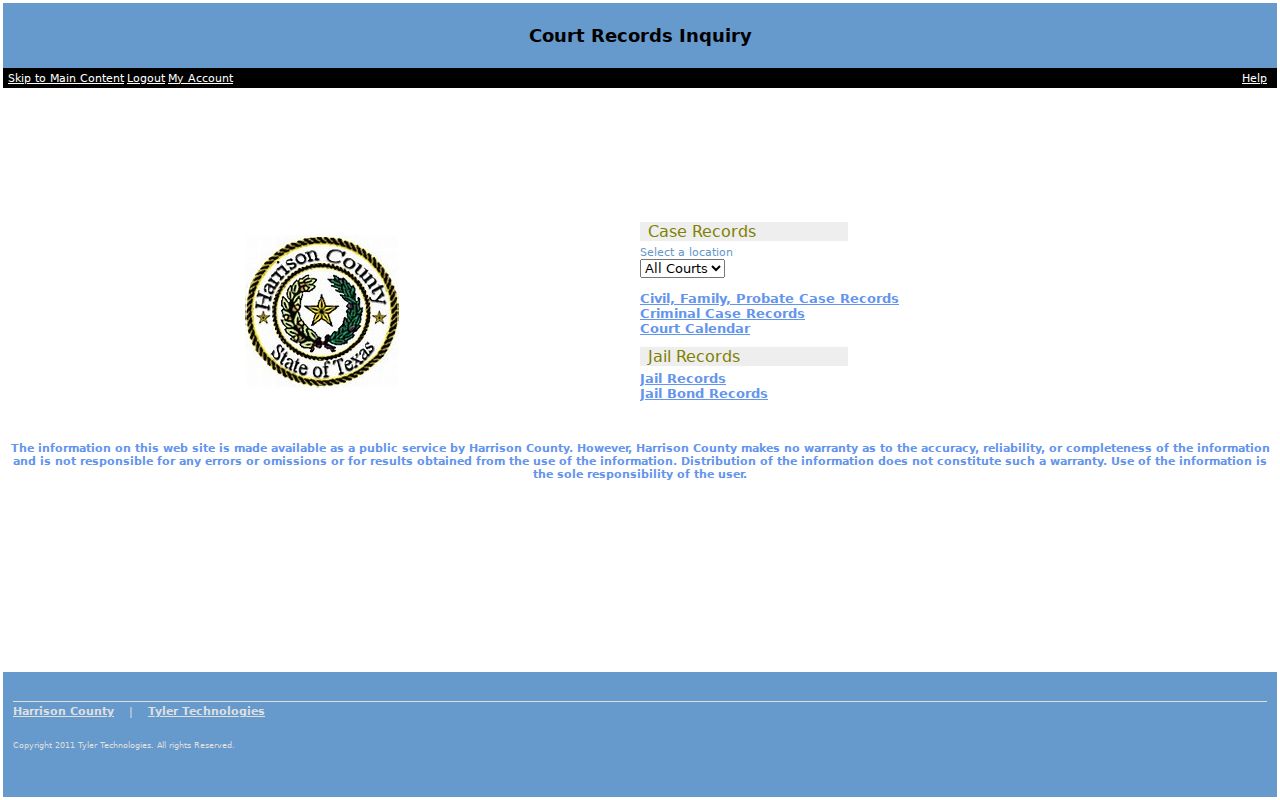 When it is unavailable, use re:SearchTX, a simple clerk request, or the District Clerk’s formal large-volume copy form. Sealed, juvenile, adoption, and expunged matters are not ordinary public results.
Marshall Municipal Court’s page also links local docket material. 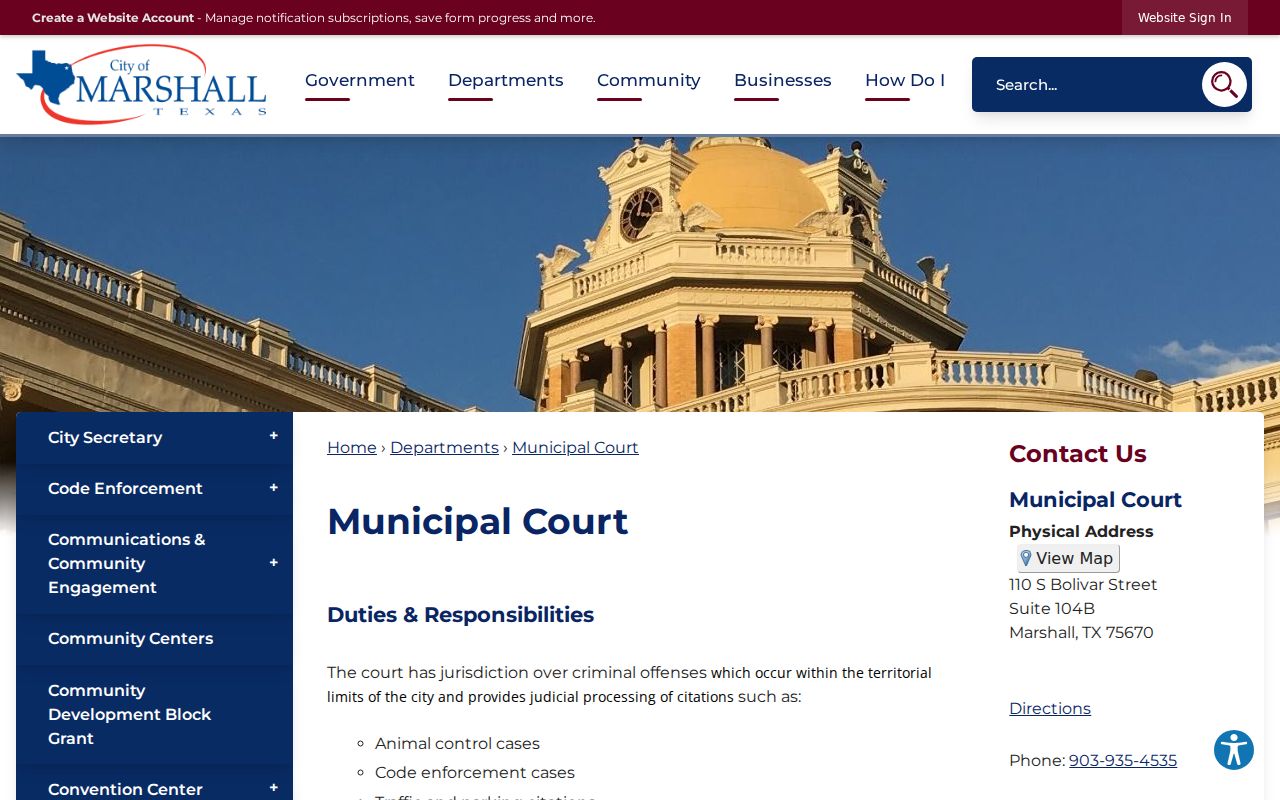 A docket records a court event and is not proof of guilt or a present address.
Marshall Vital Record Limits
Birth and death material can help with Marshall family history, but it is not a current resident directory. Under Texas Government Code §552.115, birth records are public after 75 years and death records after 25 years, subject to adoption, paternity, and other exceptions. More recent certificates need an eligible requester, identification, an application, and the appropriate fee or legal authority.
Texas OVRA presents categories for birth and death certificates or verifications and marriage or divorce verifications. 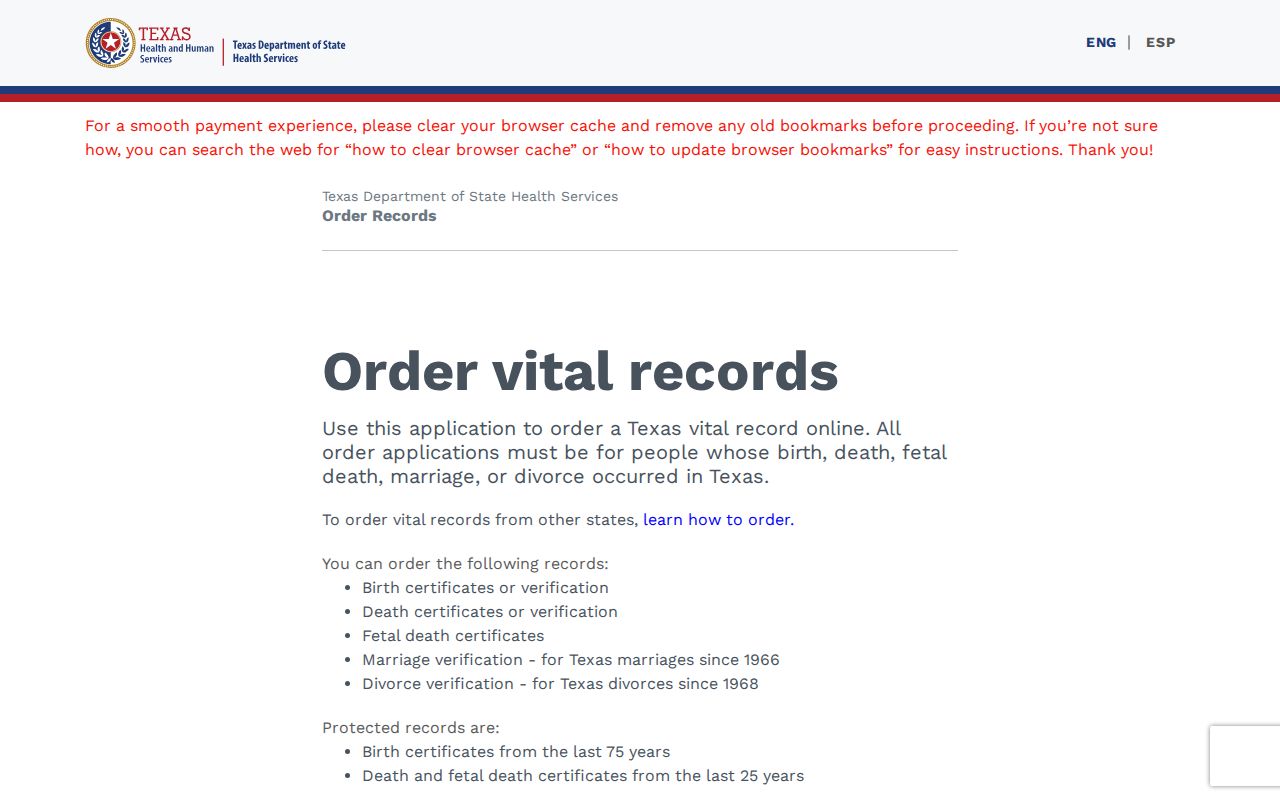 Harrison County Clerk is the local registrar route for eligible local transactions; DSHS paper procedures and its telephone or email channel remain alternatives.
Marshall Records When Portals Stop
Online access is only one channel. The County Clerk lists counter, phone, fax, mail, and department-email routes, and asks requesters to include document or case numbers when known. Marshall’s City Secretary accepts open-record requests by form, mail, fax, or email. Texas Public Information Act requests under Government Code Chapter 552 are for identifiable public information, not a request for everything about a person.
The city’s Code Enforcement page describes address-keyed iWorQ status searches and a separate concern form. 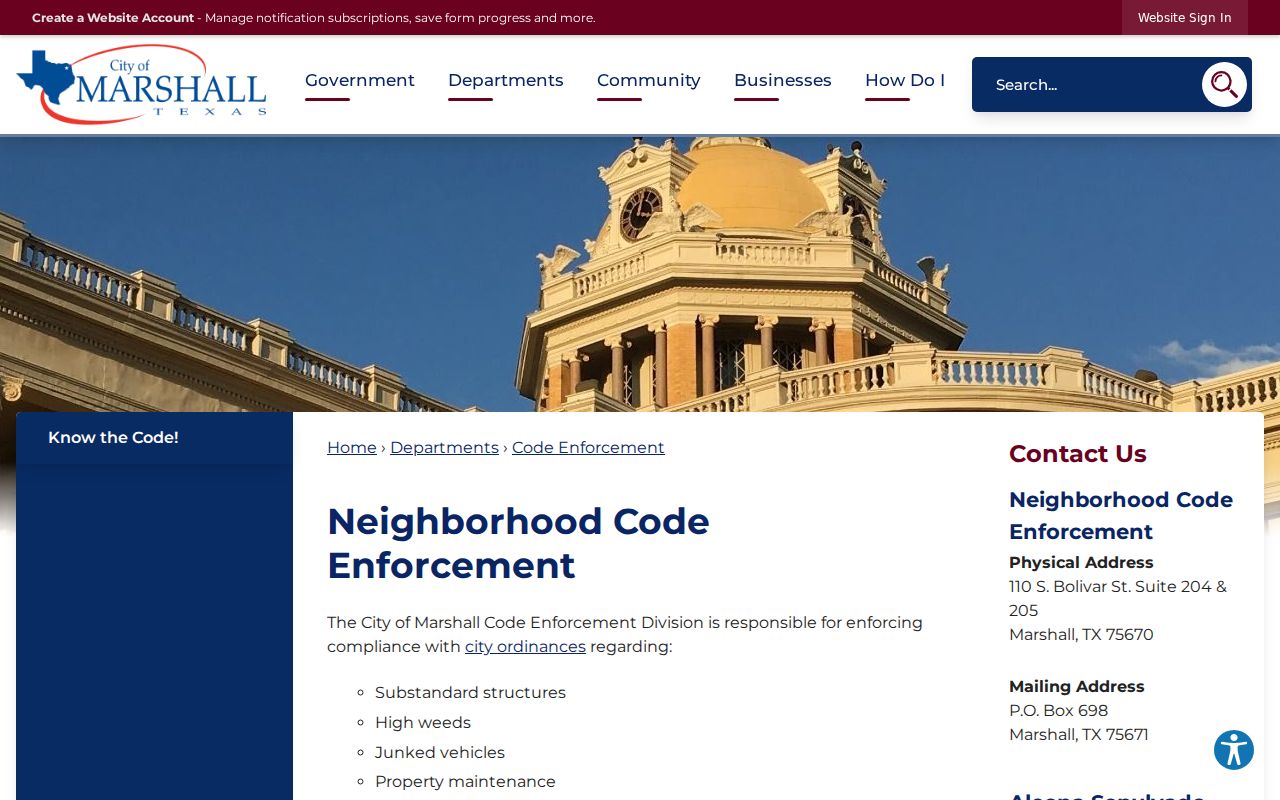 A code case or permit can confirm an administrative event at an address, but it is not a roster of everyone in a household.
For county records, the courthouse counter can provide a public terminal or clerk-assisted search. Marshall Public Library and the historical museum are the alternatives for older newspapers, photos, directories, and maps. Request only the record needed, and ask the custodian for the current fee before ordering a copy.
Marshall Historical Household Directories
Marshall’s historical shelf has documented points rather than a guaranteed complete run. A 1893 city directory is documented in Harrison County Historical Museum material, and the Texas State Library and Archives Commission explicitly lists Marshall 1924. Catalog leads identify additional volumes, but each year and holding should be confirmed with the library or partner catalog before making a special trip.
Marshall Public Library’s Local History Resources point researchers to permanent local collections, newspapers, NewsBank, HeritageHub, Portal to Texas History, and TexShare tools. 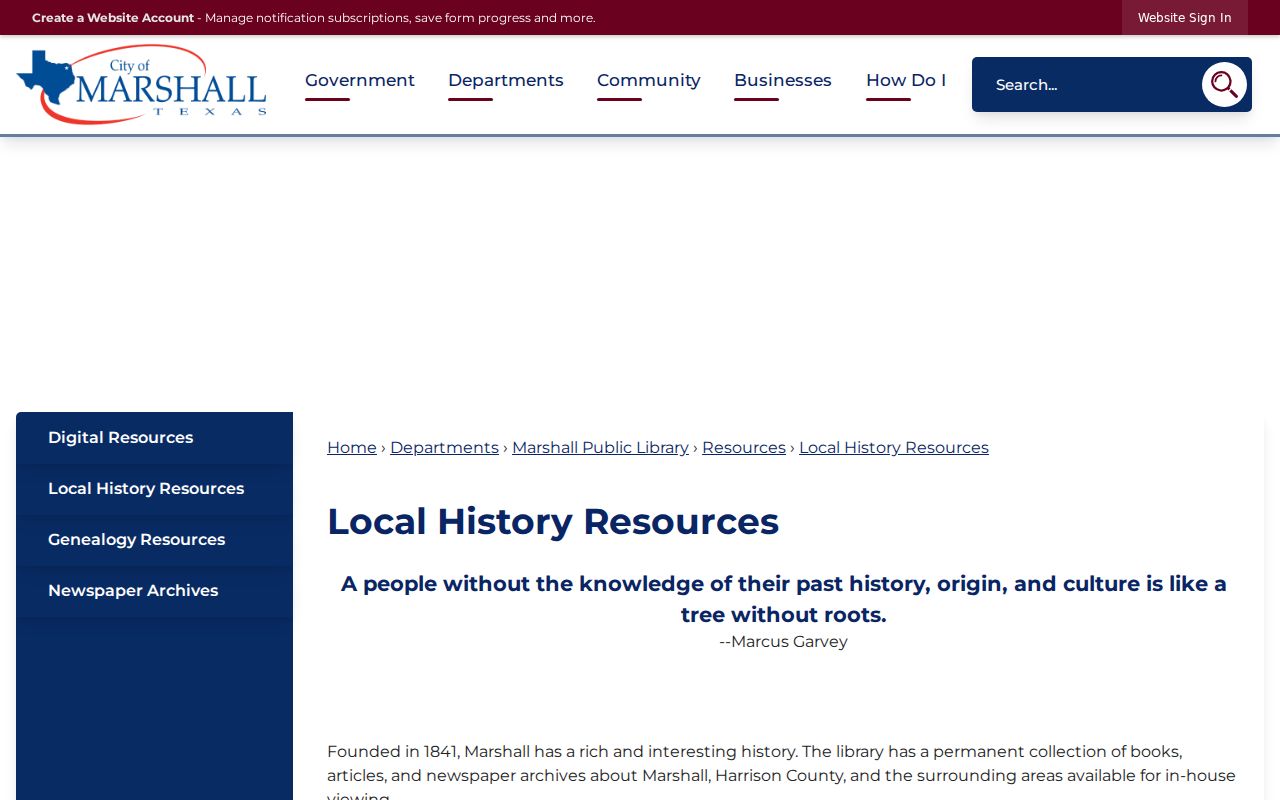 The library collection is especially useful when a name or street is too old for modern county interfaces.
Use city directories with census schedules, deeds, and newspaper notices. A criss-cross directory, when available, arranges occupants by address; a standard directory begins with a person or business. The full collection and reading method belong on the Marshall city directories page.
Marshall Records Versus Compiled Results
Official Marshall sources and commercial people-finder services answer different questions. A custodian record has a defined creator, date, field set, and correction route. A compiled result may combine fragments from public sources and other data, may lag behind a correction, and can merge people with similar names. Start with a primary record when a result affects family history, an estate question, a property trail, or a safety concern.
| Source type | Best use | What to check next |
|---|---|---|
| HCAD parcel record | Current tax-record owner and property identifiers | Separate situs from mailing address and review the deed trail |
| County Clerk instrument index | Recorded transfer or legal-party history | Inspect or order the document, because the index is only a guide |
| Library directory or newspaper | Historical household, address, or local-event clue | Compare edition date, census, deed, obituary, or probate record |
| Compiled people result | A tentative lead only | Verify with the named official custodian and respect privacy limits |
Marshall’s split portal landscape makes source comparison practical. HCAD handles the current parcel layer, Kofile documents specific historical books, the Clerk provides records outside the published online range, and the library covers the pre-digital household trail. A result that is absent from one layer may simply belong to another era or custodian.
Ask the office what its result actually represents before relying on it. A clerk can explain a document number or copy route, library staff can point to a volume or database, and Elections can describe its lawful request process. That direct confirmation is more useful than trying to turn a partial online result into a complete profile.
Marshall Directory Newspaper Trails
Marshall Public Library provides a long local-media path that is different from a property or voter record. Its local-history resources identify Marshall News Messenger archives reaching to 1849, NewsBank coverage from 2004 to the present, and HeritageHub for obituary and death-notice research. These sources can help locate a date, family relationship, former address, civic event, or business reference when an official index has little detail.
Search with surname variants, initials, street names, and nearby East Texas place names. OCR can miss a line, mistake a letter, or separate a name from its address. Compare a newspaper hit with the underlying image, then pair it with a deed, directory, probate file, or vital-record route that matches the question. An obituary is a useful family-history clue, but it is not a certified vital record and does not resolve every person with the same name.
The Harrison County Historical Museum and its Inez Hatley Hughes Historical Research Center provide another local route for photographs, documents, books, artifacts, and Portal to Texas History material. Ask the library or museum about the collection that covers the time period, rather than assuming every local item is digitized or name indexed.
Marshall Privacy Record Corrections
A public record can be incomplete, stale, or wrongly linked to a similar name. Start corrections with the custodian that created the record. The County Clerk, HCAD, Elections office, court clerk, or state agency can explain what documentation and process applies. A Texas Public Information Act request is an access channel, not a universal way to remove protected material or obtain every record about a person.
Texas also protects several categories that do not become open simply because a name is known. Recent vital records remain restricted. Adoption, juvenile, sealed, expunged, and some family-court files have separate limits. Election Code §13.004 protects certain voter application information, and the Texas Address Confidentiality Program provides an address-protection route for eligible participants. A missing record should be described as not located, not as proof that someone is elsewhere.
For a commercial data-broker issue, Texas privacy law may offer rights against covered private businesses, but it does not create a blanket deletion request against Marshall, Harrison County, HCAD, or the Secretary of State. Keep requests specific, preserve a copy of the source, and contact the agency or office named on the document.
Marshall’s Layered Records Timeline
Marshall’s records do not begin with modern web portals. Harrison County was established in 1839 and organized in 1842, while Marshall was founded in 1841 and became county seat in 1842. The County Clerk’s historical trail includes Harrison deed records, and Kofile gives specific online ranges for deeds, deeds of trust, and probate minutes. Those dates are coverage guides, not proof that every earlier or later instrument is online.
Local household evidence has its own timeline. The museum context documents an 1893 Marshall directory, TSLAC confirms a 1924 holding, and library newspapers reach back to 1849. Federal census material is released on a 72-year schedule, with 1950 the latest fully released decennial census at the time of research. Pair dates from each source rather than assuming a present parcel label matches a historic household address. This layered chronology helps identify the correct office or shelf before a search begins.
Marshall Record Labels Matter
Different records use different labels for a relationship. Keeping those labels straight prevents a search result from saying more than it can support.
- Parcel
- A defined property unit in the appraisal record, usually identified by a Property ID or GEO ID.
- Situs address
- The physical property address used for the tax record, separate from the owner’s mailing address.
- Index
- A guide to a record, such as a party name and book/page reference, rather than the complete instrument.
- Grantor and grantee
- The transferring party and receiving party named in a recorded conveyance.
- Criss-cross directory
- An address-organized directory that can help identify historical occupants.