
Marshall Previous Residents by Era
Previous residents of a Marshall address do not appear in one master result. The useful trail changes with the date. A current parcel card can supply a stable identifier and the latest deed date. Recorded instruments can carry the ownership chain backward. Directories and census records add the household layer, while newspapers and probate material help explain a move, death, or estate transfer. The table separates documented coverage from unverified assumptions. A date range for an index is not a guarantee that every document or image in that period is online.
| Source | Years It Covers | Where Held | What It Shows |
|---|---|---|---|
| Harrison deed index | 1840-1920 verified | Kofile and County Clerk | Grantor, grantee, and book or page route |
| Deed of trust index | 1880-1907 verified | Kofile and County Clerk | Security instruments and index context |
| Probate minutes | 1800s-2005 verified | Kofile and County Clerk | Estate and probate minute trail |
| Marshall city directories | 1893 example, 1924 verified, catalog leads through 1959 | Museum, TSLAC, and library partners | Listed occupants, addresses, and annotations where present |
| Federal census | Released through 1950 | NARA, FamilySearch, and library routes | Household details at enumeration |
| Local newspapers | Archive back to 1849; NewsBank 2004-today | Marshall Public Library | Notices, obituaries, events, and address clues |
City permit-register coverage has not been published as a complete searchable run. Marshall Development Services and a targeted Texas Public Information Act request are the documented fallback for a specific older permit or inspection record. Sanborn maps are available through library-linked TexShare research, but no authoritative Marshall map-year list was located.
Marshall Previous Residents Start Here
Freeze the modern parcel before looking for past residents. The Harrison Central Appraisal District property search accepts owner name, property address, account or property ID, owner ID, geographic ID, reference ID, tax-office ID, and advanced filters. Its public parcel labels include Owner Name, Property Address, City, Legal Description, PropID, GEO ID, Owner Mailing Address, and Last Deed Date. Save the situs address, PropID or GEO ID, and legal description together. The last-deed date suggests a starting point, but it is not the whole ownership history.
Keep the situs address separate from the owner mailing address. The mailing address may belong to an estate, a company, a family member, or an owner outside Marshall. A homestead-exemption clue is also not proof that a named person currently occupies the parcel. Broad HCAD searches can display only the first 1,000 results, so a street number, surname, or property identifier is more useful than a wide city search.
- Situs address
- The physical location assigned to a parcel for property records. It can differ from the address where tax mail is sent.
- PropID or GEO ID
- An HCAD identifier that helps carry the same parcel from a map result to a property card.
- Legal description
- The lot, block, subdivision, abstract, survey, or metes-and-bounds wording that ties a deed to land more reliably than an old street number.
Note: Preserve the property identifiers exactly, because a historical directory number may not match the current Marshall street number.
Marshall Previous Residents Deed Trail
The deed chain is the legal backbone for a previous-residents search, but it records property interests, not every household member. Start with the current HCAD owner and legal description. In the current recorder system or historical Kofile index, search that owner as a grantee, then identify the instrument that brought the property to that owner. The seller on that instrument is the grantor. Search the seller as a grantee to locate the earlier acquisition, then repeat. Search both party roles, spelling variants, initials, and entity names at each step.
- Record the HCAD current owner, situs address, PropID or GEO ID, legal description, and Last Deed Date.
- Search the owner as a grantee in the current recorder route or the historical Kofile index.
- Open or order the identified instrument and capture its date, seller, book and page, or document number.
- Search that seller as a grantee to find the earlier purchase, using the legal description to separate similar names.
- When the online run ends or becomes unclear, ask the County Clerk for the deed book, microfilm, or clerk-assisted route.
- Grantor
- The party transferring an interest in a deed or other recorded instrument.
- Grantee
- The party receiving that interest. Searching a seller as a grantee helps locate how that seller acquired the property.
- Chain of title
- The documented sequence of property transfers. It can include estates, trusts, companies, and multiple owners.
Harrison Kofile historical index offers the documented grantor-grantee and book-page route for older Harrison County material.
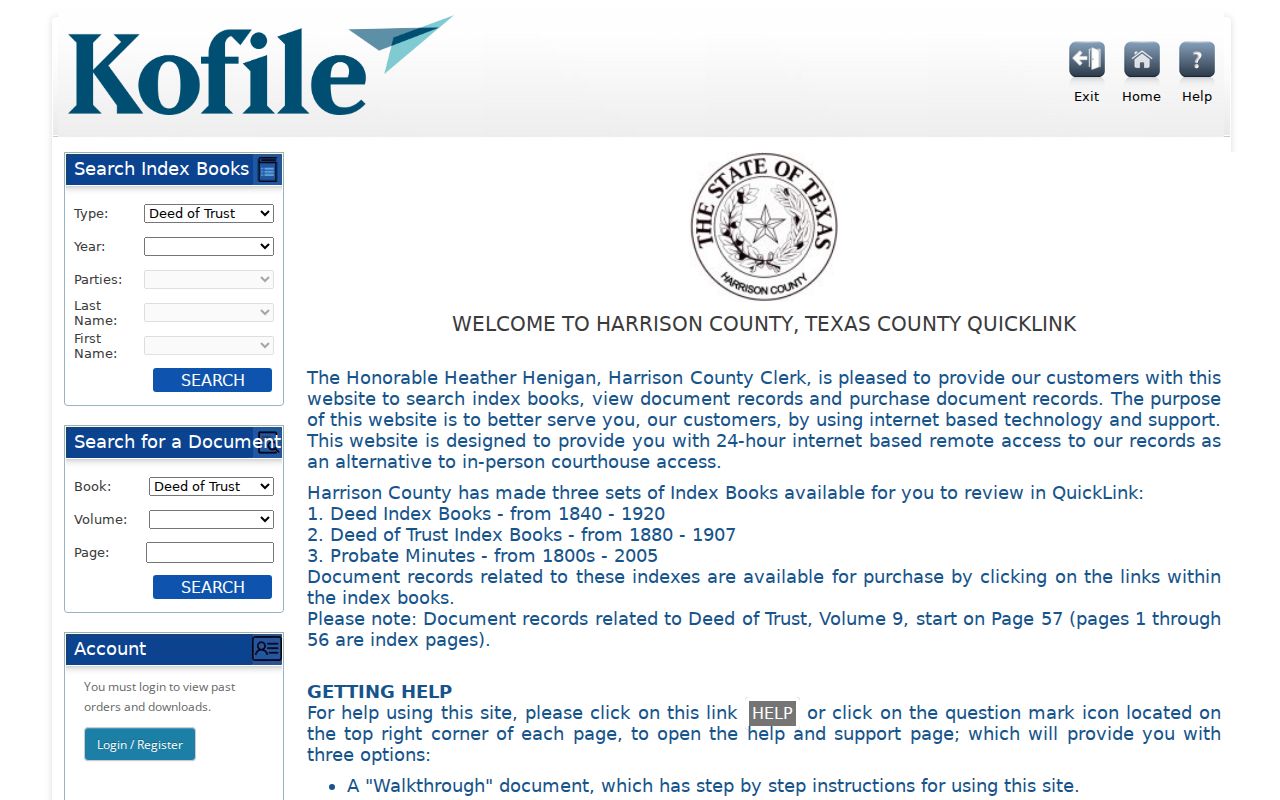
The historical index supports the backward deed trail, while the underlying document and current records can require a separate purchase, portal, or County Clerk request.
Marshall Previous Residents Need Keys
Harrison County's online historical coverage is split by record type. Kofile verifies deed index books from 1840 through 1920, deed-of-trust index books from 1880 through 1907, and probate minutes from the 1800s through 2005. Those dates do not combine into a single cutoff for all records. Kofile's Deed of Trust Volume 9 begins at page 57 because pages 1 through 56 are index pages, a small but useful check when a page search seems to start late. The county's accessible self-service disclaimer does not publish a coverage start date for its current route.
Search all spelling variations and both party roles. Early Marshall records may use initials, maiden or married names, entity names, old street terms, or legal descriptions instead of a modern number. A legal description, subdivision, lot and block, or abstract wording is often the better bridge when an address result fails. The County Clerk holds deeds, liens, plats, wills, probate, marriage, and other county records, with counter, phone, email, mail, and fee-based copy channels available when an online search is not enough.
Harrison County's records-search disclaimer explains that an index is a guide rather than the underlying instrument.
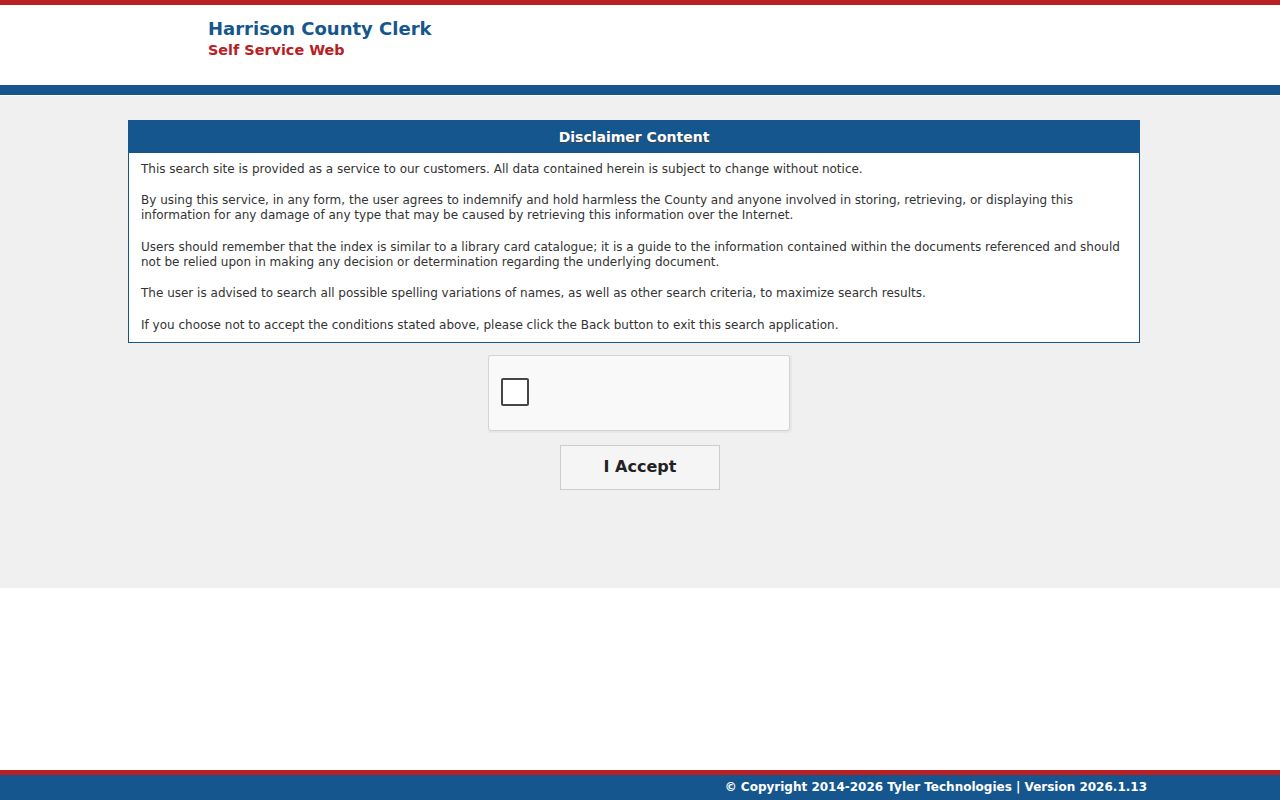
The disclaimer is a reminder to verify a book, page, document, and party relationship before adding a result to a Marshall address timeline.
Marshall Previous Residents Map Clues
Maps and city records can bracket a property change without proving who lived there. HCAD's public map offers address, owner-name, property-ID, GEO ID, abstract, subdivision, and market-area searches. Its card can supply the parcel's legal description and last-deed date for the recorder search. For an older address, compare the directory street form with a plat, nearby intersection, legal description, and historic map. Marshall research found no authoritative street-renumbering chronology, so do not assume that an 1893 or 1924 number converts directly to a current address.
Marshall's code-enforcement iWorQ route can be searched by case number, parcel number, or parcel address. Permit material is offered through city applications, but no complete public permit register was verified. Development Services or a specific records request is the right route for an older file. A permit, inspection, demolition, or certificate date can add building context. It does not by itself establish an owner change or a full household.
Marshall Public Library local-history resources point to TexShare Sanborn maps, newspapers, and archive research for address context.
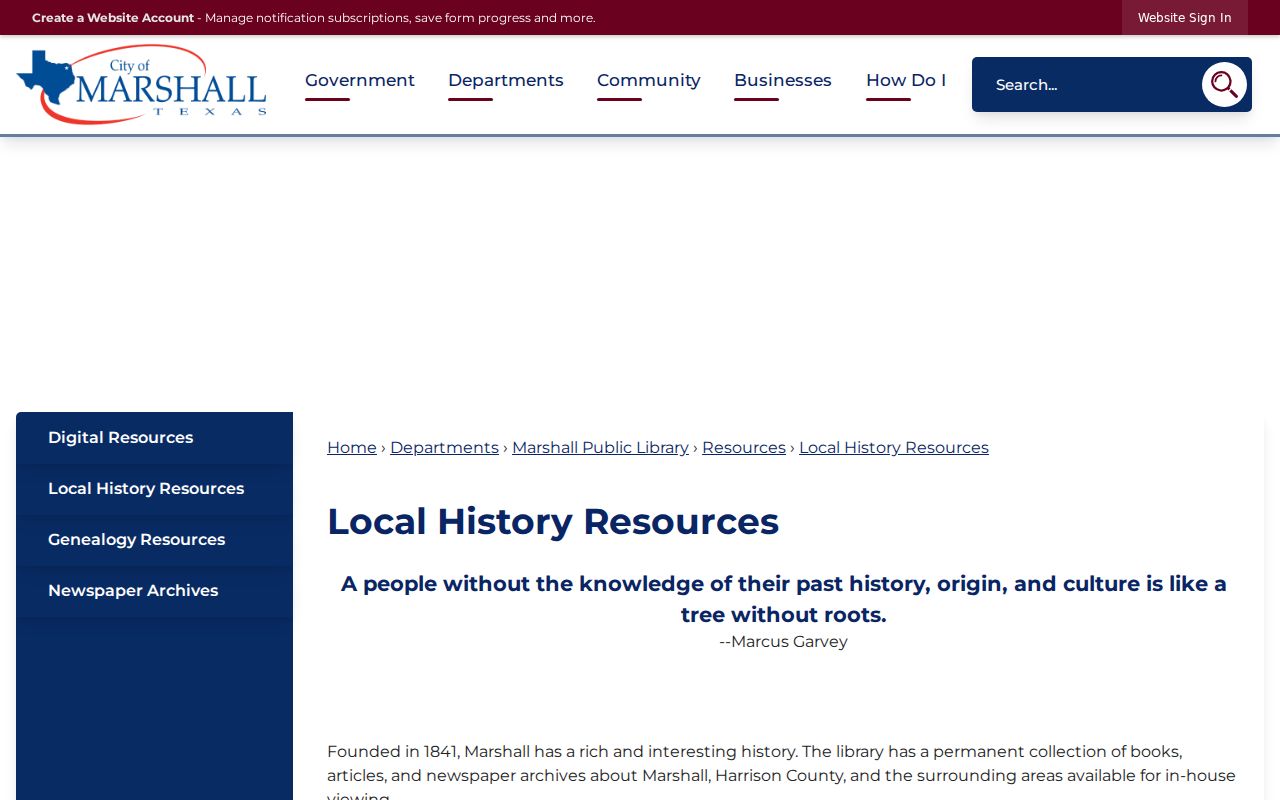
The library is the documented local fallback for maps and historical context because no separate Marshall house-history guide was located.
Marshall Past Residents in Directories
Ownership is only one layer of a Marshall address history. Past residents may appear in a city directory or census even when a different person owned the parcel. The documented directory trail includes a museum-linked 1893 example, a 1924 TSLAC holding, catalog leads from 1912 through 1933 and selected later dates, plus a 1988-89 Marshall and Karnack lead. Use them as date-specific household checkpoints. The complete collections, library routes, and reading cautions are kept on the Marshall city-directories page.
- Find the address or surname in the closest available directory and copy the edition year, spelling, and address form.
- Compare the next available directory year, noting changed initials, spouse or widow notation, and moves.
- Pair the directory with the nearest released federal census, which is currently available through 1950 under the 72-year rule.
- Search Marshall News Messenger archives, NewsBank, or HeritageHub for a notice that helps explain a gap.
- Return to the deed chain to test whether a household move matches a recorded transfer or estate event.
Portal to Texas History's city-directory browse collection is one digitized route to check before requesting a physical volume.
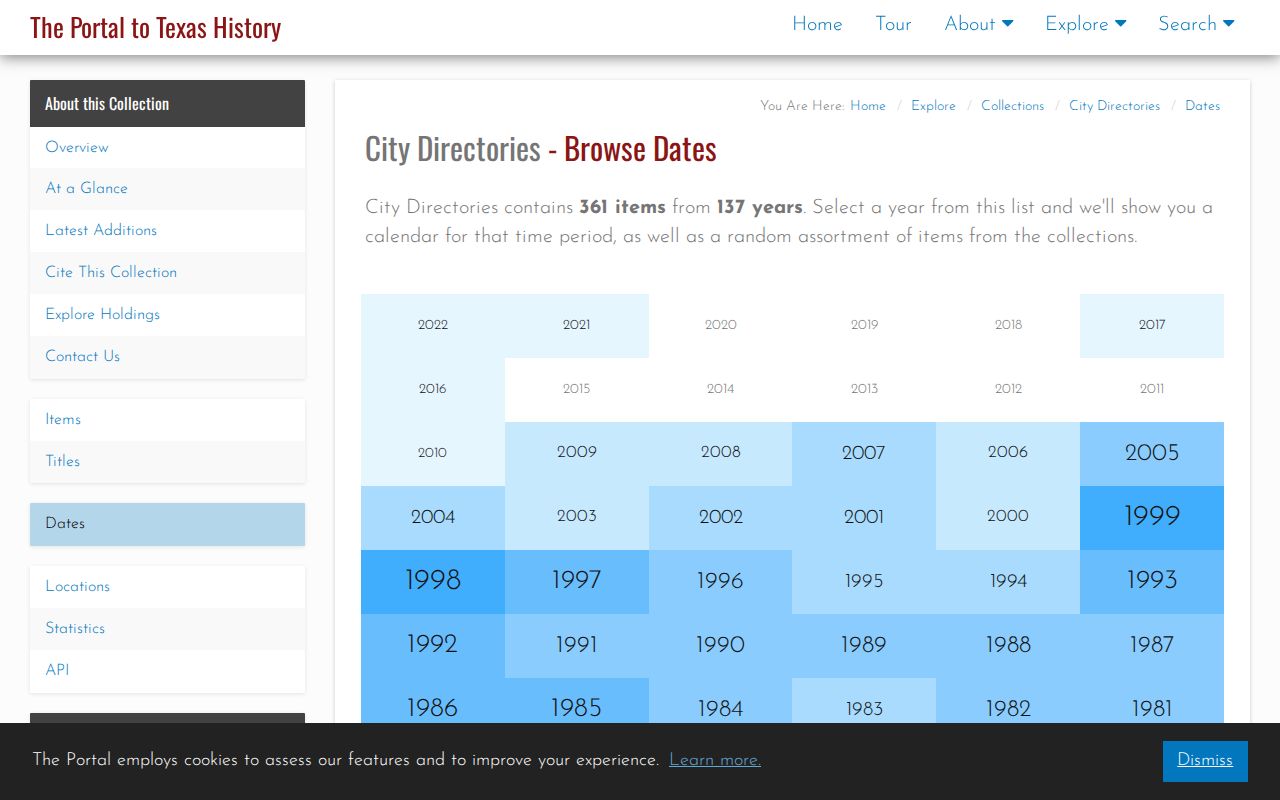
A scan or catalog page can identify a useful edition, but the title page and a second record are still needed before attaching a household to an address.
Marshall Previous Residents Endpoints
When a name falls out of the address trail, local newspaper and probate sources can help explain the change. Marshall Public Library directs researchers to Marshall News Messenger archives back to 1849, NewsBank from 2004 to today, and HeritageHub obituary resources. Search surname variants, initials, an old street name, and nearby towns. OCR errors are common, especially in older newspapers. An obituary can identify relatives or a last known place, but it should be checked against the dated deed and directory trail.
Harrison probate minutes are documented in Kofile through 2005; current probate filings go through Odyssey and the County Clerk. For a possible estate transfer, request the file or index using the decedent's name, cause number, and year where known. Wills, applications, heirship material, and final orders may identify legal parties, but a name hit alone does not prove kinship. The clerk's counter, phone, email, or written request is the fallback for material outside a public result.
Marshall Previous Residents Access Gaps
Missing online results are common in a backward address search. Harrison's historic books, current self-service route, and clerk-held records cover different eras and record types. The library and museum fill a different role with directories, newspapers, maps, photographs, books, and artifacts. TSLAC, Portal to Texas History, FamilySearch partner access, and the library reference desk are additional historical channels. For a record not indexed online, make a narrow request that names the address, legal description, party, document or likely date range.
The best Marshall previous-residents timeline labels each piece of evidence for what it is: owner, mailing recipient, directory occupant, census household member, obituary relative, or probate party. That prevents an old address clue from becoming a claim about present residence. It also makes it easier to revisit an ambiguous year when a better document becomes available.
Note: A gap between two records may reflect a missing edition, changed address form, or record-access limit rather than a broken family or property trail.